
Best windproof e-bike commuter jacket in the Netherlands

Gear · Commuting · Updated 6 November 2026
Best windproof e-bike commuter jacket in the Netherlands (2026): AGU, Rapha and Chrome Industries compared
The short answer
For most Dutch e-bike commuters I’d buy the AGU Compact Rain Jacket Commuter Reflection: a windproof, waterproof Poray 10.000 shell with a 10,000 mm water column, 316 g, reflective print over the whole jacket and a list price of €184.95. The Rapha Commuter Jacket is the better office jacket and Chrome’s Storm Salute Commute is the stretchier city shell, but both give up visibility. If you want to spend under €100, AGU’s Compact Hi-vis was €77.95 on AGU’s EU shop on 6 November 2026 (list price €154.95).
Why a Dutch e-bike commute is wetter and windier than you think
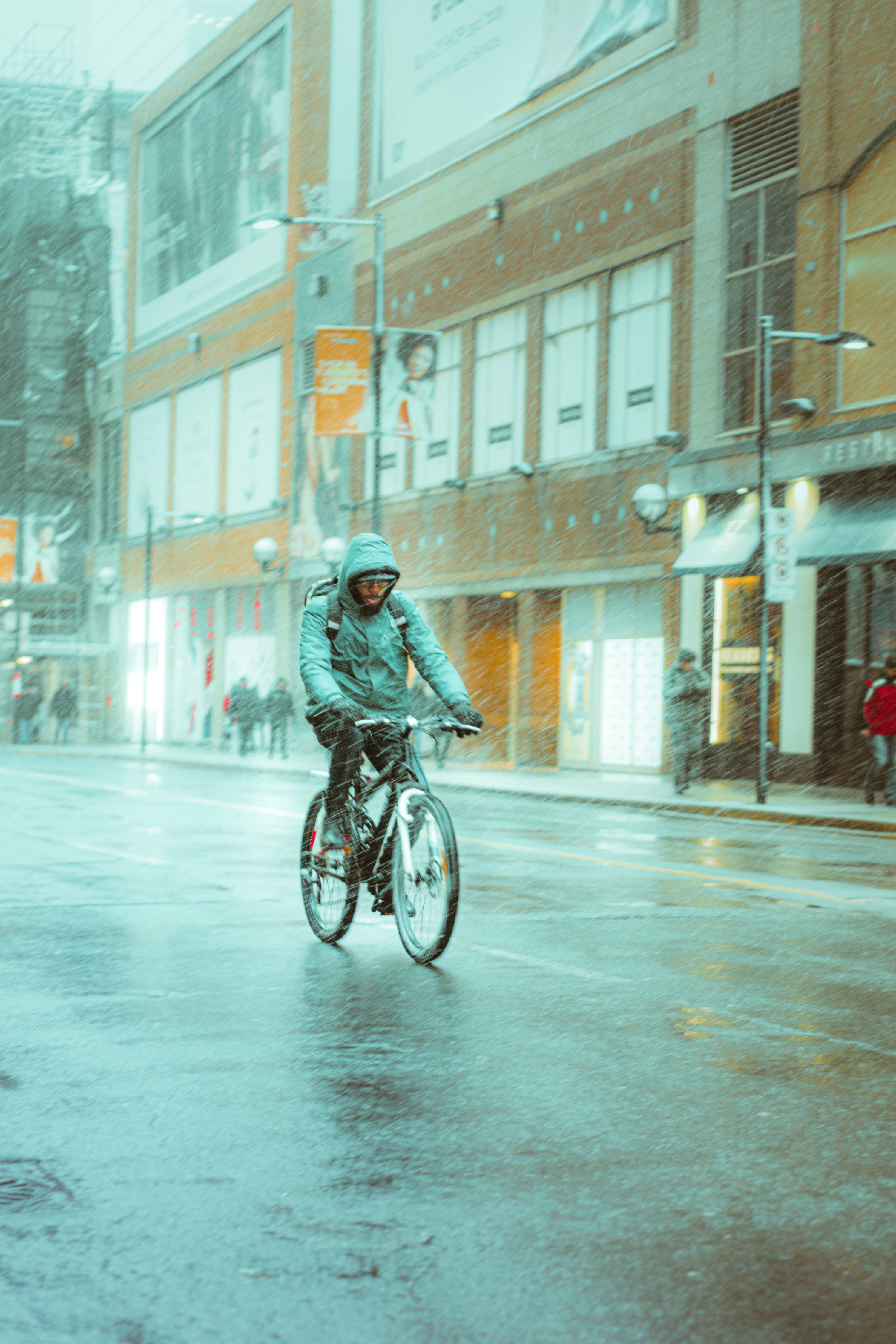
Two sets of numbers explain most of this guide. The first is rain: KNMI’s 1991–2020 climate averages for De Bilt count about 186 days a year with at least 0.1 mm of rain and about 132 days with at least 1 mm. I use the same figures in the e-bike rain cover guide. The second is wind. The country is flat and open, so rain often arrives sideways at chest height, which is exactly where an upright e-bike rider has the most surface.
Annual mean wind speed, KNMI 1991–2020 averages
Kilometres per hour, yearly average at 10 m height. Converted from KNMI station tables in m/s: De Bilt 3.6, Rotterdam 4.6, Leeuwarden 4.7, Schiphol 5.0, Vlissingen 5.4, De Kooy 5.7, Hoek van Holland 7.3.
Those are open-ground stations. Between buildings the average drops and the gusts get sharper, so read the chart as a guide to how exposed your route is, not a forecast. Now add your own speed. An e-bike assists up to 25 km/h (more in my e-bike speed limit guide), and the wind you feel is your speed plus the headwind. With Schiphol’s 18 km/h average, that’s 43 km/h across your chest before any gust.
| Headwind | Riding 15 km/h | Riding 20 km/h | Riding 25 km/h |
|---|---|---|---|
| Calm (0 km/h) | 15 | 20 | 25 |
| 10 km/h | 25 | 30 | 35 |
| 20 km/h | 35 | 40 | 45 |
| 30 km/h (storm day) | 45 | 50 | 55 |
Wind does two things. It drives rain through any weak point (stitch holes, cuffs, a zip without a flap), and it strips heat. With the standard wind-chill formula, 5°C air feels like about 1°C at 25 km/h of apparent wind and about −1°C at 45 km/h:
| Air temperature | 25 km/h apparent wind | 35 km/h | 45 km/h |
|---|---|---|---|
| 10°C | 7 | 6 | 6 |
| 5°C | 1 | 0 | −1 |
| 0°C | −6 | −7 | −8 |
A windproof shell cuts that effect, and it’s why “windproof” is half the job even on dry days. Cold also costs range: in my e-bike battery cold weather guide I put a typical Dutch winter at 10–25% less range, and 20–30% near 0°C. If a gale day makes you wonder whether riding is worth it, the e-bike commute calculator (NS train vs car vs e-bike) shows what the bike saves you over a year.
How I compared them
This is a spec-and-review comparison, not a ride test. I went through the makers’ own product pages, Dutch and UK retailer listings, and published reviews from Cycling Weekly, Cyclingnews, road.cc and T3. Where a claim comes from one retailer or one reviewer, I say so. I kept the field small: AGU (founded in Alkmaar in 1966, and it lists this commuter line for city, speed pedelec and e-bike use), Rapha (the office-friendly benchmark) and Chrome Industries (the tougher street option). A jacket had to clear these bars:
- A windproof membrane, not just a dense weave with a DWR spray on top.
- A published water rating (10,000 mm) or a brand that says plainly the jacket is for showers.
- Breathability that copes with stop-start city riding, because traffic lights are where cheap jackets soak you from the inside.
- A hood that adjusts and sits over a helmet, or a clean high collar if there’s no hood.
- Reflectivity where drivers look: back, sleeves and sides, not one small logo.
- A price I could check in euros or pounds on 6 November 2026.
Prices are list prices or the price shown on that date. Dutch sale prices move week to week, so check before you buy.
Top picks at a glance
| Jacket | Water rating | Wind | Hood | Visibility | Price (6 Nov 2026) |
|---|---|---|---|---|---|
| AGU Compact Rain Jacket Commuter Reflection (best overall) | Poray 10.000, 10,000 mm | Windproof | Adjustable, folds away | Reflective print over the whole jacket | €184.95 list (AGU EU shop) |
| AGU Compact Rain Jacket Commuter Hi-vis (best under €100) | Poray 10.000 | Windproof | Adjustable, stows in the collar | EN 20471 neon yellow plus 3M reflective details | €154.95 list; €77.95 on AGU EU shop |
| AGU Tech Rain Jacket Commuter (daily workhorse) | Poray 10.000 | “100% windproof” per AGU | Adjustable; buyers say it fits over a helmet | Hi-vis & Reflection version: neon yellow on sleeves and hood, reflective print on chest, back and upper arms | €204.95 list; €149.95 at Mantel (black Reflection version) |
| AGU Winter Rain Jacket Commuter (cold commutes) | Poray 10.000, microfleece liner and padding | Windproof | Adjustable, hides at the back | Neon yellow, 360° reflective mist print | £204.95 on AGU UK; check EU stock |
| Rapha Commuter Jacket (office-ready) | Water-resistant, sealed seams, no water column published | Sold for wet and windy conditions; no wind rating published | Stows away; too small for a helmet (Cyclingnews) | Reflective dot print on the tail | £120 (about €140) |
| Rapha Core Rain Jacket III (packable storm layer) | Fully waterproof, taped seams | Wind-resistant | Not stated in the listings I checked | Reflective sleeves, rear and armband | £140 (about €160) |
| Chrome Industries Storm Salute Commute (rough city use) | 10k mm, fully taped 2.5-layer shell | Waterproof shell; no wind rating published | Drawcord hood, awkward to adjust (T3) | Reflective back, arms and wrists; reviewers want more | About €200 (US$190, £189) |
AGU commuter jackets: best overall for Dutch headwinds
AGU is the one brand here that designs for e-bike speeds on purpose. Its commuter line is listed for “City, Speed Pedelec, e-Bike”, and the product copy talks about going fast through the rain on an electric bike. All four jackets below use AGU’s Poray 10.000 membrane, which AGU describes as windproof, waterproof and breathable. One gap: AGU’s product pages say nothing about taped seams, so feel the inside seams in a shop or ask before you assume them.
AGU Compact Rain Jacket Commuter Reflection: my pick
This is the one I’d point most people to. It’s a 2.5-layer shell in 100% recycled polyester ripstop that weighs 316 g and folds into its own back pocket. The reflective print covers the whole jacket (AGU lists it as 360° reflective detail), so you light up from every angle. The YKK front zip has a windflap and a rain gutter behind it, the cuffs are elasticated to keep water out, and a ventilation slit runs across the back. The hood adjusts and folds away. The list price on AGU’s EU shop is €184.95.
The downsides: AGU doesn’t claim the hood fits over a helmet, so try it with yours on. The all-over print looks busy off the bike. And you get elasticated cuffs rather than the extended sleeves of the Tech.
AGU Tech Rain Jacket Commuter
The Tech is the heavier everyday option: 2.5-layer recycled ripstop at 470 g (Hi-vis & Reflection version, per AGU’s UK shop). It has a covered YKK zip with a magnetic closure, a rain gutter and an asymmetric storm flap, and the extended sleeves are meant to cover your hands in an upright riding position. On the Hi-vis & Reflection version the neon yellow sits on the sleeves and hood, and the reflective print covers the chest, back and upper arms. The list price is €204.95. Retailer Mantel rates its breathability 4 out of 5, shows buyers saying the hood fits over a helmet, and listed the black Reflection version at €149.95 on 6 November 2026. Mantel also warns it may not be warm enough on cold winter days, which is where the Winter model comes in.
AGU Winter Rain Jacket Commuter
The Winter adds a microfleece liner and DuPont Sorona padding to the same Poray 10.000 shell, with a reflective mist print on the lower back, stomach, sleeves and hood. On a long cold ride the padding often saves you a separate midlayer. AGU’s UK shop lists it at £204.95. I couldn’t confirm a current EU price for the men’s version, and Mantel shows an older men’s model as sold out, so check stock first. Winter also costs range, which the cold weather battery guide covers.
Rapha: the best-looking office jacket, with limits
Rapha Commuter Jacket
This is the jacket you can wear into a meeting without changing. The cut is relaxed, and the fabric is a 2.5-layer 55% polyester / 45% polyurethane with a hydrophobic membrane and sealed seams. A mesh back yoke and a mesh-lined upper back panel add ventilation around the collar, and the tail carries a reflective gradient dot print that still shows below a backpack. In the UK it costs £120, roughly €140.
Know what you’re buying. Rapha calls it water-resistant, not waterproof, and recommends it for wet and windy conditions, but I couldn’t find a published water column or windproof rating. An earlier Cyclingnews review found it kept them dry, but said the fabric “might not breathe much”, the hood is “not big enough to go over a helmet”, and the hood cinch is hard to use. It weighed 231 g in size small. I’d buy it for dry-cold weeks and light rain, and carry something sturdier for a February front off the North Sea.
Rapha Core Rain Jacket III
When it properly rains, this is the Rapha to carry. Rapha describes it as fully waterproof and wind-resistant, with taped seams and lightweight Japanese fabrics, and it packs down small. Reflective details sit on the sleeves and rear, plus an armband. The list price is £140, about €160. The listings I checked don’t mention a hood, so confirm that on Rapha’s site before you assume one.
Chrome Industries Storm Salute Commute: best for rough city use
Chrome builds for the street, not the peloton. The Storm Salute Commute is a 2.5-layer, 100% polyester stretch shell with fully taped seams and a 10k/10k rating (10,000 mm waterproofing plus a 10k moisture-vapour rating). It has a two-way zip, a vented upper-back yoke, and reflective details on the back, arms and wrists. The stretch is what you pay for: shoulder checks, locking up, hauling the bike up a station ramp. Cycling Weekly liked the tapered fit and called it waterproof and breathable.
The limits show up in reviews. Cycling Weekly’s cons were “inadequate visibility” and price. T3 found it fine in drizzle and light rain but not heavy rain, slow to dry, close-fitting, and awkward to adjust at the hood drawcord. It suits short and medium commutes, riders who carry a backpack anyway, and anyone who wants one jacket for bike, office and pub. Add a hi-vis layer or a reflective bag cover for the dark months. The list price is about €200 (US$190, £189). One EU retailer showed €146.74 on a 27% sale on 6 November 2026, with every size sold out.
Budget and backup picks under €100
You don’t need €200 to stay dry, you need timing. Two options:
- AGU Compact Rain Jacket Commuter Hi-vis: list price €154.95, shown at €77.95 on AGU’s EU shop on 6 November 2026. It has the same Poray 10.000 shell as my top pick at 272 g, in EN 20471 neon yellow with 3M reflective details, and the hood stores in the collar.
- Rapha Commuter Lightweight Jacket: a 160 g layer that Rapha lists as windproof and water-resistant. road.cc scored its breathability 9/10 and found the thin roll-down hood fits under a helmet, but called it a shower-resistant shell and said to look elsewhere for true waterproofing. It cost £80 when road.cc reviewed it and some colours were reduced then, so check today’s price. It makes a good pannier backup.
A decent main jacket plus a cheap backup beats one expensive jacket that lives in the washing machine. Keep your luggage dry too: my guide to the best e-bike panniers in the Netherlands separates fully waterproof roll-tops (Ortlieb’s Back-Roller Classic is rated IP64) from bags that are only water-repellent. A dry jacket over a soaked rucksack still leaves you wet at the waist.
Jacket, poncho or rain suit?
Plenty of Dutch riders skip the jacket and pull on a poncho or a full rain suit. All three work, for different commutes:
| Option | Works well when | Watch out for |
|---|---|---|
| Windproof jacket | Short to medium rides, mixed weather, stops at shops and offices | Legs and shoes get wet in sustained rain |
| Jacket plus rain trousers | Steady rain and longer commutes | Extra kit to pack and put on; you sweat if the trousers don’t breathe |
| Poncho | Quick rides in work clothes; covers your hands and legs | Can billow and catch the wind at 25 km/h |
My default for a daily commuter is a jacket from this guide plus packable rain trousers in the pannier.
Reading the label: water column, breathability, windproof
In the rain cover guide I call 2,000–3,000 mm the sweet spot for a parked bike. A jacket has a harder job. It flexes with every pedal stroke, takes 40+ km/h of wind pressure, and backpack straps squeeze water into the fabric, so the ladder moves up. Treat this as a rule of thumb, not a standard:
| Water column | What it handles | Verdict for a Dutch e-bike commute |
|---|---|---|
| Under 5,000 mm | Light showers | Backup layer only |
| 5,000–10,000 mm | Steady rain | Daily minimum |
| 10,000–15,000 mm | Long, wind-driven rain | The level of AGU and Chrome here; Rapha publishes no figure for the Commuter Jacket |
| 15,000 mm and up | Coastal storms, heavy pack pressure | Worth it on the coast or for long tours |
Breathability is the number people skip and then regret at the first traffic light. Makers quote it in g/m² per 24 hours or as an RET value. For g/m²/24h, around 10,000 is a common benchmark for a commuter shell, and higher is better. For RET, lower is better: below 6 is extremely breathable, 6–12 very breathable, 12–20 moderately breathable and above 20 not very breathable (Decathlon’s scale). On the pages I checked, AGU and Rapha publish neither figure, so vents and cut matter more than the brochure. AGU’s back ventilation slit, Rapha’s mesh yoke and Chrome’s vented yoke will do more for comfort than a lab number.
“Windproof” and “waterproof” are different claims. A membrane can block wind without holding back rain, and the other way round, so look for both words plus a storm flap on the zip. Workwear rain protection used to be tested to EN 343, which was replaced in 2025 by EN ISO 24232 with the same classes (higher is better for waterproofness and breathability). Cycling jackets rarely carry it and quote millimetres instead. A fabric that only slows the wind will leave you shivering on a dijk road even when it’s dry.
Fit for an e-bike: upright, stop-start, helmet-friendly
An e-bike keeps you upright, so your chest and thighs catch the weather instead of your back, as on a road bike. Look for these features, in this order:
- High collar that closes to the chin. At 40+ km/h of apparent wind, an open collar is a cold tap on your neck.
- Sleeves cut for extended arms. Try the jacket sitting on the bike, or hugging a chair back in the shop. If your wrist shows, rain runs up your sleeve. AGU’s Tech has extended sleeves; the Compact has elasticated cuffs.
- A hood that adjusts with one hand and fits over your helmet. Only speed pedelec riders must wear a helmet by law (see the speed pedelec rules), but if you wear one, test the hood over it before anything else. My e-bike helmet buying guide covers fit and the legal rules. Cyclingnews found the Rapha Commuter Jacket hood too small for a helmet.
- A drop tail long enough for wheel spray, but not so long it catches the saddle when you stand at lights.
- A zipped pocket you can reach for keys, a card and gloves. Keep your phone in a handlebar mount, not in your hand: holding a phone while riding is a €170 fine in the Netherlands, as I explain in the guide to e-bike laws in the Netherlands for 2026. The waterproof phone mount picks cover mounts that survive rain.
- Room for one midlayer between October and March, without the sleeves ballooning.
Staying visible in the Dutch winter dark
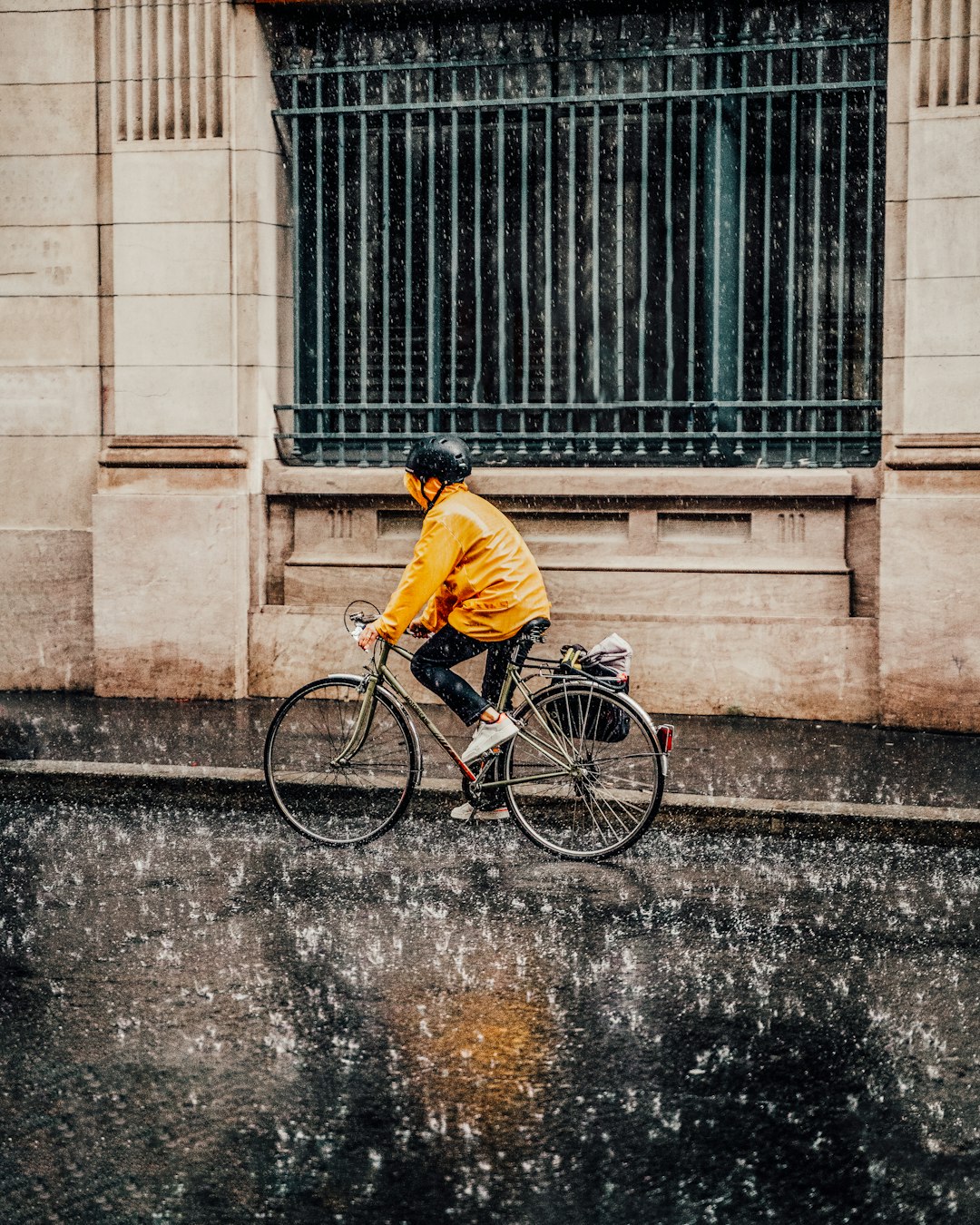
Between late October and February much of a Dutch commute happens in the dark, often in rain that swallows headlight beams. The law covers the bike, not your jacket. In the dark and in poor visibility you need a white or yellow front light and a red rear light, both steady, plus reflectors: red at the rear, white or yellow on the wheels or tyres, and four amber ones on the pedals (Rijksoverheid on bicycle lighting and reflectors). The ANWB lists the fines at €75 for missing or faulty lights and €45 for missing or faulty reflectors, and each comes with a €9 administration charge on top.
Clothing doesn’t have to be hi-vis, but be careful with clip-on lights. A loose light can go on your handlebars, bag, chest or back, but not on your head, arms or legs, and it must not flash. A blinking light on your sleeve earns a fine, not extra safety. Reflective sleeves and hoods are fine because they’re reflective material, not lights.
Two standards help when you shop. AGU’s hi-vis jackets cite EN 20471, the high-visibility standard for professional high-risk work such as road works. EN 17353:2020 sits below it, for medium-risk situations, and covers daylight (type A), darkness (type B) and both (type AB). Neither is a legal requirement for cycling, but a certified label tells you the fluorescent and reflective areas have been tested.
Match the material to the light. Fluorescent yellow works best in grey daylight and reflective material comes into its own in headlights, and AGU’s hi-vis versions carry both. Reflective marks on moving parts such as wrists and ankles are the usual road-safety advice, because they show a human shape in motion. Rapha’s tail print and Chrome’s reflective details are the style-first end of the scale, and Cycling Weekly marked Chrome down for visibility. If you wear one of those, add a hi-vis vest or a reflective bag cover in winter.
Care: wash less, reproof when it stops beading
Wash at 30°C with non-bio detergent, no fabric softener, zips closed, and only when the jacket really needs it. Spot-clean mud instead of running a full cycle. Check the care label too: Rapha’s tag for the Commuter Jacket says no bleach, dry cleaning, tumble drying or ironing, so line-dry it. The water-repellent finish (DWR, the beading you see on new fabric) wears out before the membrane does. When water stops beading and starts soaking in patches, clean the jacket and apply a wash-in or spray-on reproofer. Once a season is about right for a daily commuter. Dry it fully after each ride, because a wet jacket balled up in a pannier over the weekend turns musty and wears out faster.
Where the specs and prices come from
I checked everything on 6 November 2026, and prices and stock can change.
- AGU: product pages for the Compact Reflection, Compact Hi-vis, Tech Hi-vis & Reflection and Winter Hi-vis & Reflection, plus Mantel’s Tech listing and Galaxus’s Compact listing for the 10,000 mm figure.
- Rapha: Condor’s Commuter Jacket listing, Wheelbase’s Core Rain Jacket listing, the Cyclingnews Commuter Jacket review and the road.cc Commuter Lightweight review.
- Chrome: the Cycling Weekly review, the T3 review and an EU retailer listing.
- Weather, law and standards: KNMI station tables, Rijksoverheid, the ANWB and a summary of EN 17353.
FAQs
| What is the best windproof jacket for an e-bike commute in the Netherlands? | For most riders, the AGU Compact Rain Jacket Commuter Reflection: a windproof, waterproof Poray 10.000 shell (10,000 mm), 316 g, with reflective print over the whole jacket, at a €184.95 list price. Choose the Rapha Commuter Jacket for office days in dry cold or light rain, and Chrome’s Storm Salute Commute for a stretchy, durable city shell. Under €100, look at AGU’s Compact Hi-vis when it’s on sale. |
| What water column do I need for a Dutch e-bike commute? | 10,000 mm is what I’d look for, because it covers long, wind-driven rain at e-bike speeds. 5,000 mm is the minimum for daily use, and below that you should treat the jacket as a shower backup. The water column matters less than a storm flap on the zip and a hood that works with your helmet. |
| Do I legally need hi-vis clothing on an e-bike in the Netherlands? | No. The law requires lights and reflectors on the bike in the dark and in poor visibility (fines are €75 for lights and €45 for reflectors), not specific clothing. Hi-vis or reflective jackets are optional, and any clip-on lights you wear must be steady and sit on your chest or back, not your head, arms or legs. |