
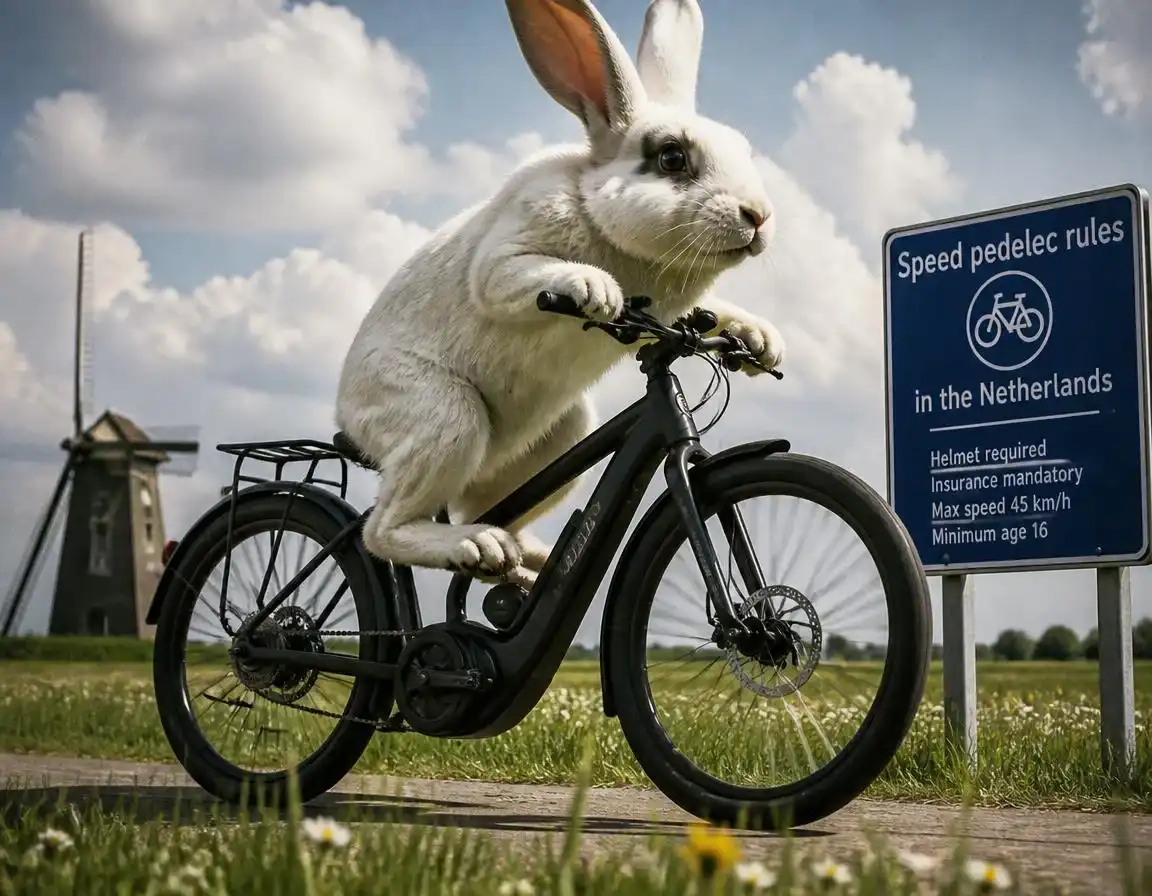
Speed pedelec rules in the Netherlands

Speed pedelec rules in the Netherlands: the complete 2026 guide
Rules and fine amounts checked against Rijksoverheid, RDW and the 2026 fine schedule · 28/09/2026
A speed pedelec (S-pedelec, 45 km/h e-bike) is legally a moped, not a bicycle. You need a yellow RDW licence plate, WA insurance, an AM or car licence, an approved helmet and must ride on the fiets/bromfietspad or the carriageway, never a standard cycle path. Minimum age is 16. 2026 fines run from €90 (light tuning) to €300 (heavy tuning), with €130 for no approved helmet or riding a cycle-only path.
Most e-bike rules in the Netherlands are gentle: 25 km/h, no licence, no plate, ride wherever cyclists ride. Cross into speed pedelec territory and everything changes at once, because the law stops seeing a bicycle and starts seeing a moped (bromfiets).
This guide puts the whole speed pedelec rulebook in one place, checked against Rijksoverheid, the RDW and the 2026 fine schedule. For the 25 km/h world, see our e-bike laws guide for 2026. Our piece on the e-bike speed limit in the Netherlands explains where the 25/45 km/h split comes from.
What counts as a speed pedelec in the Netherlands
A speed pedelec is a two-wheeler with electric pedal assistance that supports you up to 45 km/h (motor power up to 4 kW). A normal e-bike stops assisting at 25 km/h and is limited to 250 W. That difference puts the vehicle in the moped category, with every consequence in this article. Since 1 January 2017 the plate and helmet rules have applied nationwide.
Rijksoverheid lists the recognition points: a yellow moped plate, a left rear-view mirror, a vehicle identification number (VIN), working lights and red plus white or yellow reflectors. Bikes with those features are speed pedelecs whatever the sticker says. Beware the grey zone: a 25 km/h e-bike that has been tuned, or fitted with a throttle that assists above 6 km/h, is legally a moped too. Without registration, that is the worst of both worlds.
Age, licence and the yellow plate
Three documents stand between you and the road:
- Age and licence. Minimum age is 16 and you need an AM moped licence. A car (B) licence automatically includes AM, so most adult commuters already qualify.
- Registration. Every speed pedelec gets a yellow moped plate through the RDW, plus a kentekenbewijs (registration certificate) you must carry while riding. On a new bike the dealer normally handles this. An imported bike needs an RDW inspection, then you pay the fees and have the plate made by an RDW-approved plate maker.
- Insurance. WA (third-party liability) cover is compulsory from the moment the bike is registered in your name, exactly like a scooter. Costs are covered below.
Buying used? Transfer the registration into your name together with the seller, bringing valid ID, the kentekenbewijs and the tenaamstellingscode. Arrange your own WA policy first, because cover is required from the moment the bike is in your name. Our second-hand e-bike guide has the full checklist. For this class, add “plate and certificate match the frame VIN”.
The helmet rule: which helmets are legal
Helmets are mandatory on a speed pedelec, for the rider and any passenger. The law accepts two types:
- An approved moped helmet (ECE 22.05 approval, or the newer 22.06). Look for the E-mark: a circle with a capital E and a country number (E4 is the Netherlands).
- An approved speed pedelec helmet marked NTA 8776:2016, the Dutch standard for higher-speed e-bike impacts. It looks like a cycling helmet but covers more of the head and is tested at higher impact speeds.
A plain EN 1078 bicycle helmet does not qualify. That is the kind you would wear on a city e-bike, where helmets are only advised (see our helmet guide). Ride without an approved helmet and the 2026 fine is €130. A passenger without one risks the same, and for a passenger under 12 the rider gets the fine.
Where you may ride, and how fast
This rule surprises people most because it inverts cyclist instincts. A speed pedelec belongs on the combined bicycle/moped path (fiets/bromfietspad) where one exists. Where there is none, you ride on the carriageway. A standard cycle-only path (fietspad) is off limits, as is the pavement. Motorways and autowegen are also closed to speed pedelecs.
Speed limits follow the surface you are on: 45 km/h on the carriageway, 40 km/h on a combined path outside built-up areas, 30 km/h on one inside them. A lower posted limit, such as a 30 km/h zone, always wins. Those caps matter in practice, since a 45 km/h bike on a 30 km/h moped path past school traffic is both illegal and unpopular. Some regions let you use certain cycle paths at an adapted speed, so check your municipality or province for exemptions.
Other moped rules apply too: no handheld phone while riding, and the same alcohol and drug rules as for other motorists. Tuning is a fine risk, covered in the table below.
Registration, insurance and tax: what owning one costs
Speed pedelecs average around €8,000, so budget beyond the sticker price for these items:
| Item | Cost (2026) | Notes |
|---|---|---|
| RDW registration (new bike) | Usually arranged by the dealer | Putting it in your name costs €13.10 via RDW if you do it yourself |
| Importing a speed pedelec | €58.50 identification + €50 certificate + €13.10 name registration = €121.60 | Needs an RDW inspection first. The plate is made separately by an RDW-approved maker |
| WA insurance (compulsory) | Premium varies with value and provider | WA-only covers damage you cause to others, not theft or damage to your own bike |
| Road tax (MRB) | €0 | Mopeds, including speed pedelecs, are exempt from motorrijtuigenbelasting |
The insurance point catches people out. WA is the legal floor and the cheapest premium, but if your €4,000 commuter disappears from a station rack, WA-only pays nothing. Theft and own-damage cover needs an all-risk policy. Our e-bike insurance guide compares what the Dutch market offers. If your speed pedelec runs through work, the lease scheme for employees often bundles insurance into the monthly amount.
The 2026 fines table
These are the current administrative fine amounts, so you can price the risk honestly (the CJIB adds a small administration fee on top):
2026 fine amounts. Riding without a plate or licence is also fined, and a tuned 25 km/h e-bike that is not registered as a moped can cost roughly €300, with seizure possible after repeat offences.
The pattern is clear: the most common mistakes are not about speed. They are path choices and paperwork, such as riding the fietspad because it feels natural, or skipping the helmet on a short hop. Both cost €130 and are entirely avoidable.
Speed pedelec vs e-bike vs fatbike: which rule set applies
| Rule | Normal e-bike (25 km/h) | Speed pedelec (45 km/h) | Legal fatbike (25 km/h, 250 W) |
|---|---|---|---|
| Legal class | Bicycle | Moped (bromfiets) | Bicycle |
| Helmet | Advised, not required (a helmet duty for under-18s is planned for 2027 but is not yet law) | Mandatory: ECE-approved moped helmet or NTA 8776:2016 | Advised, not required (same planned change) |
| Licence / minimum age | None | AM (or B), age 16+ | None |
| Licence plate | No | Yellow moped plate + certificate | No |
| Insurance | Optional (theft cover) | WA compulsory | Optional (theft cover) |
| Where you ride | Cycle paths everywhere | Fiets/bromfietspad or carriageway; never a standard cycle path | Cycle paths everywhere |
The fatbike column comes with a warning. A fatbike is only a bicycle if it stops assisting at 25 km/h, has at most 250 W and has no throttle that assists above 6 km/h. A tuned or throttled fatbike is legally a moped, and riding it without moped registration, licence and insurance risks fines and seizure. Our fatbike rules guide covers that in full.
A speed pedelec is the fastest legal way to cover 15 to 30 km a day without a car, and on rural routes the 45 km/h carriageway rule works well. Inside dense city rings, the 30 km/h path limit and the ban on standard cycle paths erase much of the advantage over a strong 25 km/h e-bike, while adding plate, helmet and insurance overheads. Choose the 45 km/h class for distance, not for town. New to the country as well as the bike? Our guide for expats buying an e-bike in the Netherlands covers the settling-in side.
FAQs
Do I need a licence plate on a speed pedelec in the Netherlands?
Yes. Every speed pedelec carries a yellow moped plate, and you must carry the kentekenbewijs (registration certificate) while riding. Dealers normally register new bikes with the RDW. For an import, the 2026 RDW fees are €58.50 (identification), €50 (registration certificate) and €13.10 (putting it in your name).
Can I ride a speed pedelec on the cycle path?
Not on a standard cycle-only path: that is a €130 fine in 2026, the same as riding on the pavement. Use the combined bicycle/moped path (fiets/bromfietspad) where one exists (30 km/h inside built-up areas, 40 km/h outside) and the carriageway where it does not (up to 45 km/h). Some regions allow speed pedelecs on specific cycle paths through sub-signs or exemptions.
Is a normal bicycle helmet legal on a speed pedelec?
No. You need an approved moped helmet (ECE 22.05 approval, shown by a circle with a capital E and a country number) or a speed pedelec helmet marked NTA 8776:2016. A plain EN 1078 cycling helmet does not qualify. Riding without an approved helmet costs €130 in 2026, and a passenger without one risks the same fine.
What licence and minimum age do I need for a speed pedelec?
You must be at least 16 and hold an AM (moped) licence. A car licence (category B) already includes AM, so most adult riders need nothing extra.
Is insurance compulsory for a speed pedelec?
Yes. WA (third-party liability) insurance is compulsory from the moment the bike is registered in your name. WA covers damage you cause to others, not theft or damage to your own bike, which needs an all-risk policy.
None of this is meant to put you off. The speed pedelec rulebook is the moped rulebook with pedals, and once the plate, helmet and path habits are routine, they fade into the background. Learn the three documents, learn the paths on your route, and the rest is riding.
