E-Bike Service Cost in the Netherlands

E-Bike Service Cost in the Netherlands: What You’ll Actually Pay in 2026
The short version
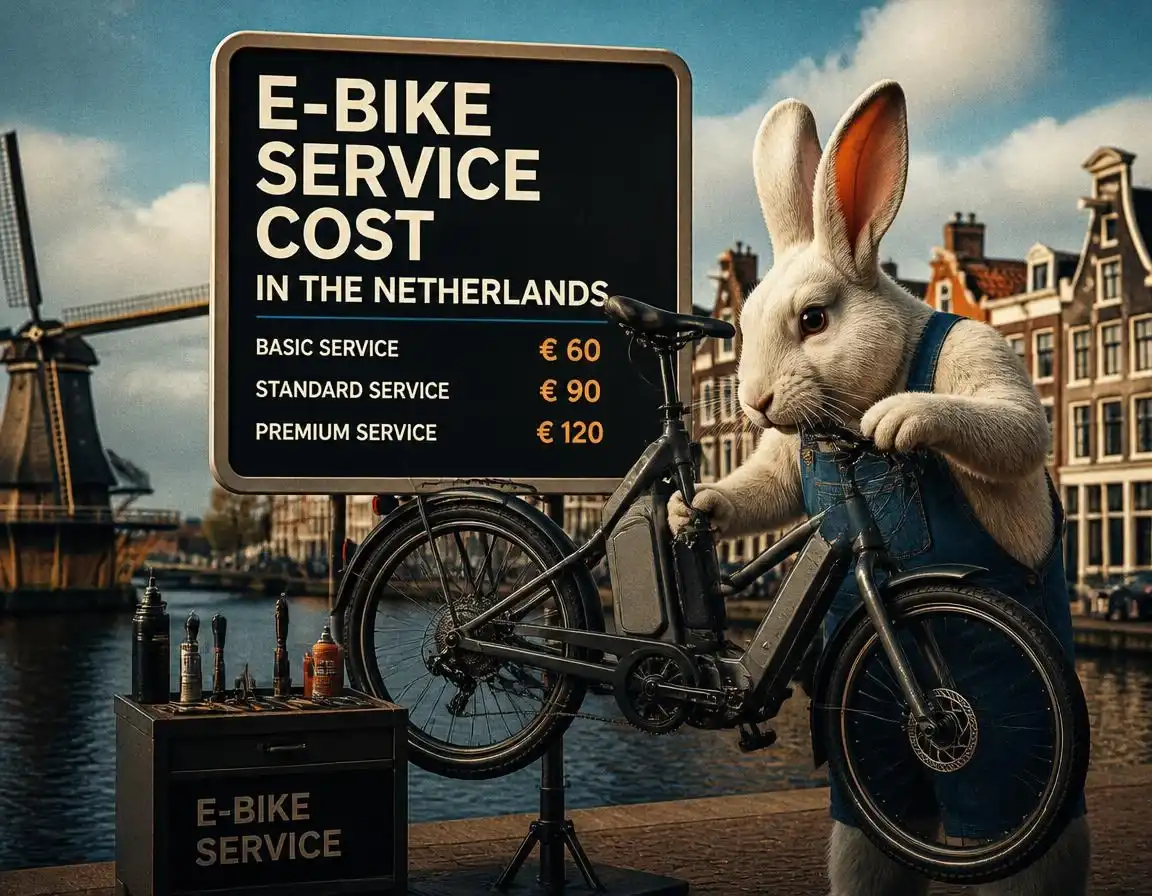
An e-bike service (onderhoudsbeurt) in the Netherlands costs €60–€135, and about €90 is the most common price, with parts on top. Fixed-price workshops often start around €60, while premium central-Amsterdam packages reach about €240. Wear parts are billed separately: brake pads €25–€45 a set, a rear tyre with tube €30–€55, chain and cassette €60–€110. Most riders who use a workshop land between €100 and €300 a year all-in. The rare big-ticket items, a battery at €420–€830 list for popular Bosch and Shimano packs or a motor at €300–€700 before labour, can mostly be diagnosed in advance, and the manufacturer’s warranty only helps if you service the bike the way its terms require.
Every e-bike owner reaches the same moment: the bike that felt silent and effortless in the showroom starts to tick, rub or lose range, and a friend says “just get it serviced” without saying what that costs. To answer it properly we compared the Consumentenbond’s price research, BOVAG’s guarantee terms, Multiscope’s survey of what Dutch owners really spend, published workshop price lists and the figures in our other ebykes guides. The headline is kinder than most people fear, but the spread between a €60 fixed-price service and a €240 premium package is real, and knowing what sits inside each number is the whole game.
What an e-bike service actually includes
An e-bike service is a normal bicycle service plus an electrical layer, and that layer is why it costs more than your old omafiets tune-up. According to the Consumentenbond, most Dutch bike mechanics (fietsenmakers) offer two levels: a basic service (basisbeurt) and a bigger one (grote beurt) in which the bike is usually stripped down and cleaned. Either way, expect checks and adjustments on the brakes (pad wear and disc trueness; a hydraulic bleed is normally extra), the drivetrain (chain wear measurement, cassette and derailleur adjustment, clean and lube), wheels and bearings (spoke tension, hub and headset play), tyres, lights and bell, and a bolt check. Heavier bikes shake fixings loose a little sooner, so that last item matters more on an e-bike.
Then comes the electrical layer: treating the electrical contacts, inspecting motor cables and connectors for corrosion, checking for firmware updates, a test ride with the assist switched on and, where the shop has the manufacturer’s tool, a fault-code and battery readout (uitlezen). On Bosch bikes a dealer can print a report with the battery’s state of health and error history. Ask for it even when nothing is wrong, because it’s the page that prices a used bike fairly later, as we explain in our second-hand e-bike buying guide.
🇳🇱 Dutch words on a price list
Onderhoudsbeurt or beurt is a service, basisbeurt a basic one and grote beurt a full one. Uitlezen is reading the fault codes, accu the battery, uurtarief the hourly rate, garantie the warranty and erkende dealer an authorised dealer.
One more thing before you ring round: not every shop will touch every e-bike. The Consumentenbond warns that some shops don’t service brands they don’t sell because they lack dealer status, readout equipment or parts, and that a bike bought online can cost more to service at a shop that didn’t sell it. Phone first, name the brand and ask whether the price is fixed.
2026 price bands, from €60 to €135 (and beyond)
Prices below exclude parts unless stated, and they are a snapshot. Ask for a written quote with labour and parts split out.
Service price by workshop type
| Where | Typical NL price, 2026 | Notes |
|---|---|---|
| Any shop, e-bike service | €60–€135 (€90 most common) | Consumentenbond price research, 2025–26; parts extra |
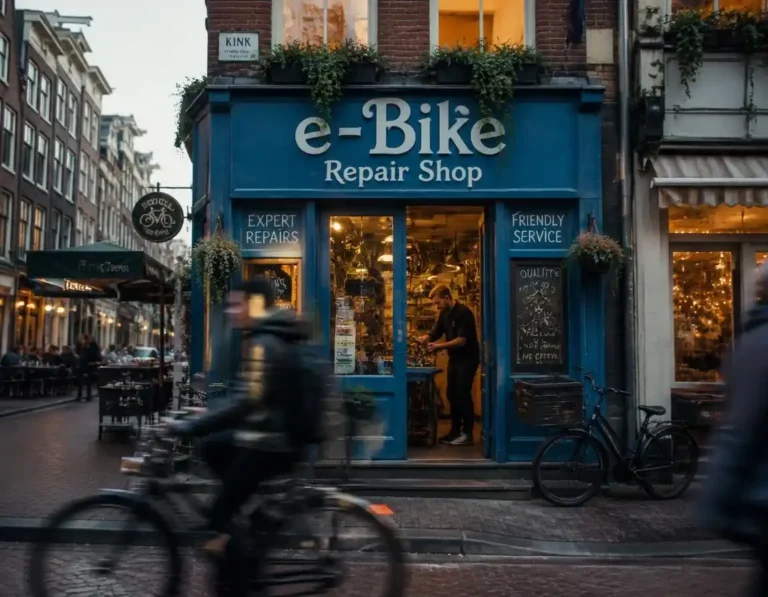
| Fixed-price and chain workshops | €60–€110 | Published 2026 price lists in our Amsterdam repair-shop survey; check what is included |
| Brand dealer | About €125 (published example) | Dealer diagnostics included; the route for warranty bikes |
| Premium central workshops | About €240 for a three-hour package | Fixed €100 an hour; thorough, with a premium invoice |
| Mobile mechanic | €60–€65 an hour plus €5–€15 call-out | Great for punctures and adjustments; one published Eindhoven price is €110 plus €15 call-out for a full service |
| First service on a new bike | Often discounted where you bought it | Makers generally advise a first check within three months or 500 km; ask at purchase |
Labour rates explain most of the gap: roughly €60–€75 an hour at independents, €75–€100 at dealers and about €100 at premium central workshops in 2026. Independents and chains compete on that rate and win at €60–€110, while dealers and premium workshops price in branded diagnostics, warranty paperwork and extras. Neither is “the” price. Cost-conscious? The Consumentenbond points out that BOVAG publishes a list of common repairs with the average time each should take, so you can multiply by a shop’s hourly rate and estimate the bill before you book.
Wear parts and extras
| Job | Typical NL price, 2026 | Notes |
|---|---|---|
| Brake pads, set fitted | €25–€45 | Replace disc pads once the material is down to about 1 mm |
| Hydraulic brake bleed | €20–€35 | Usually extra; ask whether the price is per brake or per bike |
| Rear tyre with inner tube, fitted | €30–€55 | The tyre alone is €25–€55; e-bike-rated tyres sit at the top end |
| Chain and cassette, fitted | €60–€110 | Replace together; the ANWB says chain wear is often noticeable around 4,000 km |
| Fault-code readout or diagnosis | Free to €40 | Often credited if you go ahead with the repair |
| Battery capacity test | €10–€35 | Ask for the capacity as a percentage, in writing |
| New battery | €420–€830 list for popular Bosch and Shimano packs | The Consumentenbond quotes €250–€900 overall; shops often sell below list, and fitting is often free where you buy, about €30–€80 for in-frame packs at a workshop |
| Replacement motor | €300–€700 for the unit, before labour | A Bosch mid-motor swapped and coded at a dealer lands at €500–€1,500 all-in |
🧾 Check the VAT line
Repairing bicycles falls under the reduced 9% VAT rate according to the Belastingdienst, so the labour on your invoice should carry 9%, while parts are normally charged at the standard 21%. An itemised quote shows you which is which, and it’s the easiest way to compare two shops fairly.
The wear-part maths nobody quotes you
A service is predictable; wear parts are where budgets leak. Brake pads and drivetrains are where e-bikes eat parts fastest: the ANWB notes that pads wear quicker on an e-bike because the brakes work harder, and the chain and cassette take every newton the motor and your legs put through them. These are the intervals we plan around:
- Chain and cassette: the ANWB advises replacing them together and says chain wear is often noticeable around 4,000 km. Measure the chain with a wear gauge every 500–1,000 km and replace it on time, because a stretched chain chews the cassette and turns a small job into a €60–€110 chain-and-cassette job.
- Brake pads: check them every few months, monthly if you commute daily. Most mechanics replace disc pads once the material is down to about 1 mm. A set costs €25–€45 fitted.
- Tyres: roughly 3,000–6,000 km on the rear and about double that on the front. A rear tyre with tube costs €30–€55 fitted, and our tyre replacement guide covers which puncture-protection grades earn their premium.
- Brake fluid: hydraulic systems generally want fresh fluid every one to two years (check your brake maker’s interval) at €20–€35, sooner if the lever travels to the grip.
- Cables and housing on mechanical-shift bikes: annual and cheap. Internal hub gears and belt drives remove most of that line, which is part of what you paid extra for at purchase.
Buying parts yourself? Our guide to e-bike spare parts in the Netherlands shows where to look.
A realistic yearly budget
This is where the sources part company. Multiscope’s 2023 E-bike Monitor, a survey of 5,063 Dutch adults, found that owners spend €39 a year on maintenance on average, and €48 on average for a basic service, well below the shop prices above. The average also includes owners who do their own upkeep or spend nothing at all, so treat it as a floor, not a budget. A better method is to build the year from line items. Here is a daily commuter riding about 4,000 km:
| Item | Typical price | How often | Per year |
|---|---|---|---|
| Annual service | €90–€135 | Once a year, market price | €90–€135 |
| Rear tyre with tube | €30–€55 | Every 3,000–6,000 km | About €20–€70 |
| Brake pads | €25–€45 | One set a year | €25–€45 |
| Chain and cassette | €60–€110 | About every two years | €30–€55 |
| Total | About €165–€305 (€14–€25 a month) |
Ride about half as far and the wear lines roughly halve, which puts you at about €130–€220 with a market-price service, or about €100–€175 at a €60–€90 fixed-price workshop. Double the distance and you will service twice and replace parts twice as often: roughly €330–€610.
Realistic yearly budget by rider type (service plus wear parts)
Ranges are our arithmetic from the price bands in this guide (service plus wear parts averaged over their life), not survey data. For comparison, Multiscope’s survey average is €39 a year.
The big-ticket items: battery, motor, display
Three components carry real money, and all three are diagnosable before they strand you. The Consumentenbond puts a new battery at €250–€900. Popular 500–750 Wh Bosch and Shimano packs list at about €420–€830, shops often sell below list, and fitting is often free where you buy the pack and roughly €30–€80 for an in-frame pack at a workshop. Our battery replacement cost guide breaks it down by brand, how long an e-bike battery lasts explains when to expect the bill, and the repair-versus-replacement guide covers when a cell rebuild is the smarter euro. Note that the Consumentenbond says there is no quality mark for rebuilders.
Motors rarely die outright but do fail at sensor or connector level. The unit costs €300–€700 before labour, and a Bosch mid-motor swapped and coded at a dealer lands between €500 and €1,500 all-in. That is why the manufacturer’s warranty matters (most makers give two years) and why opening a motor or battery yourself ends it. Displays and controllers cost far less than either, but prices vary by system, so ask for a quote. And before anyone condemns a battery: a tired charger or dirty contacts can mimic a dead pack, which is why our charger replacement guide is worth a look first.
⚠️ The diagnostic fee that often isn’t a fee
A fault-code readout costs anywhere from free to about €40, and a battery capacity test around €10–€35. Ask upfront whether the fee is credited if you go ahead with the repair. KwikFit, for one, deducts the diagnosis from the repair bill. Always ask for the capacity as a percentage, in writing: that one number turns “the battery seems weak” into a warranty conversation or an honest quote.
Dealer or independent: choose by the job, not by loyalty
The split is simpler than the forum arguments. Independent workshops and chains such as KwikFit, which services most e-bike brands, are the smart choice for brakes, tyres, chains, cassettes, bearings and routine mechanical service: faster to book and cheaper per hour. Brand dealers are the route for warranty claims on the motor and battery, firmware work on older systems and the official diagnostic readout, because only certified tools and accounts can perform or document those. BOVAG-member shops add a safety net either way: three months’ guarantee on service and repairs, plus BOVAG Hulp bij Klachten and the Geschillencommissie Tweewielers if you disagree about the work. If a repair will drag on, ask whether they lend a replacement bike.
Timing matters too. At Amsterdam workshops, booking lead times double or triple from March to June, while December and January are the calm months. A service due in autumn is far easier to book now than in spring.
🔧 Riding a Batavus, Sparta or Koga?
Accell, the group behind Batavus, Sparta, Koga and Babboe, was declared bankrupt on 11 August 2026. The Consumentenbond advises asking the seller about warranty, because the shop that sold you the bike stays your legal contact, but Accell’s own factory warranty is not something to count on. Trade press reported on 12 October that Dutech had completed a purchase of the Batavus, Koga and Babboe brand rights, with Sparta not included, so the picture is still moving. Ask your dealer about parts availability before something breaks, and see our battery guide for what it means for brand-specific packs.
Warranty and servicing: what you actually have to do
Two layers apply. First come your legal rights against the seller: the Netherlands has no fixed statutory warranty period, and a product must last as long as you can reasonably expect. Second is the manufacturer’s warranty, where most makers give two years, and the terms almost always carry conditions.
Servicing is often one of those conditions. The Consumentenbond reports that Batavus, Gazelle and Sparta require timely, regular maintenance at a recognised specialist of the brand to keep the factory warranty, and manufacturers generally advise a first check within three months or 500 km, then a fuller service every year. So read your warranty booklet before handing the bike to an independent, and keep proof of every visit: Bosch dealers can log each service in the digital service book inside the eBike Flow app.
- Bike still in warranty: motor and battery claims go through a certified dealer of that brand, and a claim handled by an uncertified shop can be refused.
- Out of warranty: independents are usually the better value for everything except firmware-level faults.
- Either way: never open the motor or battery yourself. It ends the warranty, as our repair-versus-replacement guide explains.
How often, really
The honest schedule: a first check within three months or 500 km of buying, while spokes settle and bolts reveal themselves; then once a year or every 2,500 km, whichever comes first, which is the interval most Dutch dealers publish (some mechanics say 2,000 km). The distance rule bites sooner than people expect: a 15 km commute five days a week adds up to about 3,900 km a year, so you reach 2,500 km in under eight months. Riders doing around 5,000 km a year or more, cargo riders and anyone hauling kids will hit that mark twice a year and should book twice a year.
Bikes that sleep outside get a pre-winter once-over of brakes, lights, drivetrain and electrical contacts, because Dutch damp and road salt find every shortcut a summer service took. After any crash or fall, treat a check as mandatory rather than scheduled: cracked mounts and bent discs hide well until they don’t. Leasing through your employer? Check what the lease includes before paying for a service yourself, and see our e-bike lease guide.
What you can safely do yourself (and what you can’t)
- Do: clean and lube the chain every few weeks of commuting, keep tyres at the printed pressure, check bolt tightness at the bars and saddle monthly, wipe mud off the motor with a damp cloth, and store the battery indoors at roughly 30–60% charge in a dry room over winter. The habits in our battery charging guide are free service intervals in disguise.
- Do: install firmware updates yourself where the brand allows it. On Bosch Smart System bikes the eBike Flow app transfers updates over Bluetooth, which makes it the one dealer job many owners can now skip; older systems and other brands usually still need a dealer’s tool.
- Don’t: open the motor or battery casing, and never pressure-wash the motor or bearings. The warranty ends, and lithium packs are not a hobby project.
- Don’t: bleed hydraulic brakes or true discs as a first experiment on the family cargo bike. The €20–€35 shop fee is cheaper than the lesson.
- Before booking a diagnostic: if the bike simply won’t switch on, work through our e-bike troubleshooting guide first.
Done consistently, the DIY layer trims your invoice because the workshop spends its hour on wear parts and diagnostics instead of cleaning a year of grime off your chain. And when something goes wrong between services, knowing whether it’s a wear item or a warranty item is half the cost conversation. Theft and accident damage belong to your insurer rather than your mechanic, while wear and tear is commonly not covered at all, which is where our e-bike insurance guide picks up the thread.
✅ The budget that works
Set aside about €10 a month if you ride lightly and up to €25 if you commute daily. That covers a workshop service, the pads, a tyre and the odd chain-and-cassette, and in years when nothing wears out, the surplus quietly builds the battery fund: a popular Bosch or Shimano pack lists at €420–€830. Service cost isn’t the price of owning an e-bike; it’s the subscription fee on the cheapest kilometres in the country.
Frequently asked questions
How much does an e-bike service cost in the Netherlands in 2026?
Most shops charge €60–€135 for an e-bike service, and about €90 is the most common price (Consumentenbond), with parts extra. Fixed-price and chain workshops often start around €60, a brand dealer was about €125 in our price survey, and premium central-Amsterdam packages reach about €240. Wear parts come on top: brake pads €25–€45 a set, a rear tyre with tube €30–€55 and chain plus cassette €60–€110, so a realistic year costs roughly €100–€300 depending on how far you ride.
How often should an e-bike be serviced?
Book a first check within three months or 500 km, then a full service once a year or every 2,500 km, whichever comes first. Riders doing about 5,000 km a year or more, cargo bikes and anyone carrying children should book twice a year, and a bike that lives outside deserves a pre-winter check of brakes, lights, drivetrain and electrical contacts.
Do I have to use a brand dealer to keep my e-bike warranty?
It depends on the brand. Batavus, Gazelle and Sparta make regular servicing at a recognised specialist a condition of their factory warranty, and other makers set maintenance conditions too, so read your warranty booklet before using an independent. Your legal rights as a buyer are separate: the Netherlands has no fixed warranty period, but a product must last as long as you can reasonably expect. BOVAG shops add three months’ guarantee on their own work. Motor and battery warranty claims and fault-code readouts go through a certified dealer, so keep every invoice.
Sources and how we checked
Last checked on 17 October 2026. Prices are snapshots, so ask for a written quote before you book.
- Consumentenbond, Elektrische fiets onderhouden and Reparatie elektrische fiets (both updated 2 February 2026); Consumentengids, Houd je fiets in vorm (May 2025)
- Multiscope, Onderhoudsmarkt e-bikes bedraagt €217 miljoen (12 September 2023)
- BOVAG, Garantie voor fietsen (three-month repair and service guarantee)
- ANWB, Snelst slijtende fietsonderdelen
- Belastingdienst, Diensten met 9% btw
- Bosch eBike Systems, over-the-air updates and digital service book
- KwikFit, e-bike service (diagnosis credited against repairs); NES Bike, e-bike maintenance in Eindhoven (August 2026)
- Accell bankruptcy: Hart van Nederland (11 August 2026) and Transition Vélo (12 October 2026)