How to Charge an E-Bike Battery Correctly?

How to Charge an E-Bike Battery Correctly: A Dutch Rider’s Guide for 2026
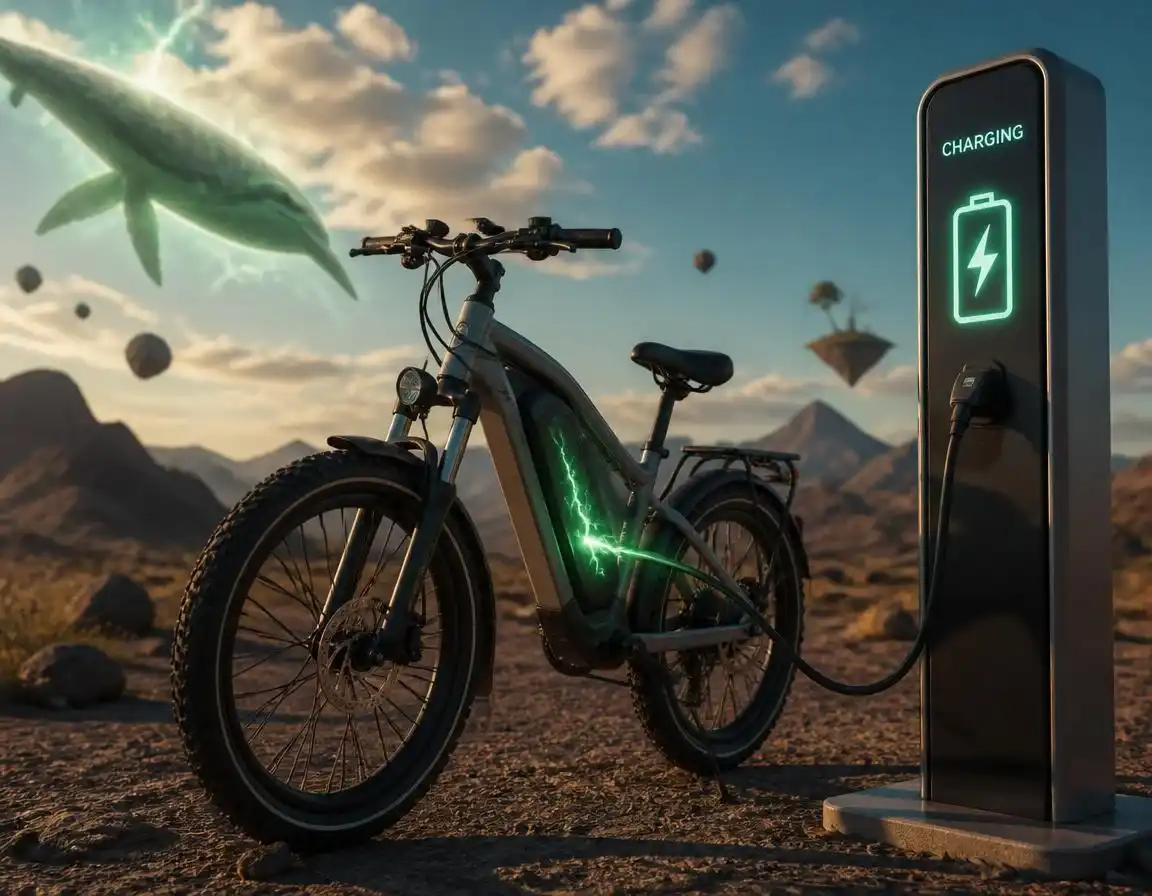
I’ve spent thirty years around bikes and the last ten of them arguing with e-bike batteries, mostly in Dutch bike sheds in February. Charging correctly is not complicated, but the small habits are worth real money: a replacement pack costs as much as a decent second-hand bike. Here is exactly how I charge mine, and what I tell friends who ask.
The short version
Charging an e-bike battery correctly comes down to a few boring habits: original charger only, room temperature, hard non-flammable surface under a smoke alarm, everyday charges between roughly 20% and 80%, and never charge a pack straight off a frozen bike. Store it at 30–60% if the bike stands for weeks. Do this and a quality lithium-ion pack gives you 500–1,000 full cycles — years of commuting here in the Netherlands — before a €500-plus replacement. That’s it.
Why charging habits decide how long your battery lives
Electric bikes are now the backbone of the Dutch bicycle market — 48% of the 858,000 new bikes sold in 2024, but a dominant 72% of the industry’s turnover that year, climbing to almost three-quarters of turnover in 2025, according to RAI Vereniging and BOVAG figures. That means millions of lithium-ion packs cycling through Dutch hallways, sheds and stairwells every night, and most of their owners have never read a line about how to treat them.
Here is the whole science in one paragraph. Lithium-ion cells age in two ways at once: every full charge cycle wears them a little, and calendar time wears them even if they sit unused. Heat speeds up both, and so does holding the pack at either extreme — bone empty or pinned at 100%. What does not happen is a “memory effect”: Bosch is explicit that partial charges and interrupted charging do not harm their packs at all. So the goal is not babying the battery, it is avoiding the three things that genuinely hurt it: freezing, heat, and sitting at the extremes.
Treat it well and a quality pack delivers 500 to 1,000 full charge cycles before capacity drops to roughly 70–80% — for a daily commuter, that is five years or more. Treat it badly and you’re shopping for a replacement sooner: a new branded 500 Wh battery typically costs €500–€800 in the Netherlands, with premium packs above €1,000. Our guide to what an e-bike really costs in the Netherlands puts that in context — it is the single biggest running-cost item after the bike itself. If you are still choosing a bike, the removable-versus-integrated battery question is covered in our e-bike overview, and it matters more for charging convenience than most specs on the sticker.
How to charge an e-bike battery correctly, step by step
- Look at the battery first. Swelling, dents, a hot smell, a cracked case or a connector that looks corroded means no charging — take it to a dealer. A damaged pack is the one that catches fire.
- Let it settle. Straight off a hot summer ride, give it twenty minutes to cool. Straight off a freezing one, give it a couple of hours indoors to reach room temperature (more on that below).
- Plug the charger into the battery first, then into the wall socket. That is the sequence most manuals and Bosch dealers specify, because it keeps the switching spark away from the battery port. Unplug in reverse: wall first, then battery.
- Put it somewhere sensible. Dry, ventilated, out of direct sun, on a hard non-flammable surface — tile, concrete, metal shelf. Not on the sofa, not under a coat, not on the bed.
- Stay in the house while it charges, in a room with a working smoke alarm, and unplug when it reaches the level you want. Don’t leave it connected for days “just in case”.
- Use only the original charger, or a genuine replacement of the exact same model. Voltage and charge profile are matched to your pack; a lookalike bargain charger is how warranties and batteries die together. If yours has died, our accessories guide covers what to look for in a genuine replacement.
The 20–80% rule: how full should the battery be?
For day-to-day use, keep the pack between roughly 20% and 80%. Lithium-ion cells are mechanically stressed at both ends of the scale, so living in the middle measurably slows the capacity fade — this is the same reason your phone’s software offers an “optimised charging” mode. Top up after rides rather than running the battery flat, and you will never think about this again.
Two honest caveats. First, 100% is not poison: fill it right before a long ride, a cargo day or a headwind commute across the polder, because that is what the capacity is for. What ages the pack is parking it at full for days on end. Second, never let it sit at empty: a fully discharged pack left for weeks can drop below the voltage floor its electronics need, and that is a terminal condition. Some manuals also recommend an occasional full charge so the battery management system can balance its cells — check yours, and if it asks for one, do it the night before a big ride so the full state earns its keep.
Temperature: the silent killer of Dutch e-bike batteries
Bosch rates its packs for charging between 0°C and 40°C, with room temperature ideal — and cell manufacturers are blunter still: charging below 0°C plates metallic lithium inside the cells and causes damage you cannot reverse. In a Dutch winter that single rule matters more than any other on this page. Ride in the cold all you like (range will drop 20–40%, temporarily and harmlessly), but bring the battery in and let it warm up before it meets the charger. A pack that has been on a frozen bike for an hour needs a couple of hours at room temperature, both to warm through and to let condensation dry.
Summer gets less attention and deserves some. Charging in direct sun, in a hot car boot, or in a shed that turns into an oven adds heat stress on top of charging heat. If the battery is hot from a ride, let it cool first; charge in the shade or indoors. And never cover the charger or battery while charging — both need to shed heat, which is why the hard-surface rule exists.
Storing the battery for weeks or months (the winter stall)
If the bike is going to stand — winter break, a semester abroad, a long holiday — take the battery off and store it separately at roughly 30–60% charge, which on most displays is two or three lit LEDs. Bosch recommends a dry spot between 0°C and 20°C, and 10–20°C if the air is damp; a frost-free basement or insulated shed beats both a warm living room and a freezing outdoor box. Ventilated, away from radiators and paper piles, ideally in a room with a smoke detector.
Then put a reminder in your phone: check the charge every two to three months and top it back into the 30–60% band if it has sagged. Packs self-discharge slowly, and a forgotten pack that drifts to zero is a pack that dies. The same rules cover a spare battery — which, by the way, should also be stored at part charge and never kept pinned to the charger “ready for action”.
| Situation | Charge level | Where it lives |
|---|---|---|
| Daily commuting | 20–80%, topped up after rides | On the bike, indoors or in a dry shed |
| Night before a long ride | 100% | Room temperature, hard surface, smoke alarm |
| Weeks or months unused | 30–60%, rechecked every 2–3 months | Dry, 10–20°C, off the bike, ventilated |
| Spare / second battery | 30–60%, never stored full or empty | Same as above, away from flammables |
Charging safely at home: what the Dutch fire brigade teaches
This is the part nobody expects in a charging guide, and in the Netherlands it is non-negotiable. Since 2020, more than 300 building fires in the Netherlands have been traced to e-bike batteries specifically, and the number of battery-caused building fires overall roughly doubled between 2019 and 2024, according to Stichting Salvage figures cited by Brandweer Nederland — serious enough that the fire service, BOVAG, the RAI Vereniging and the ANWB jointly launched the national “Ik Laad Accuraat” campaign on 30 September 2025. The fires are rare per battery and overwhelmingly concentrated in packs that are damaged, modified, wrongly charged, or charging somewhere stupid.
The brigade’s rules, which I follow to the letter: charge while you are awake and at home; put the battery on a stable, hard, non-flammable surface; keep it out of hallways, stairwells and anywhere that is your only way out; make sure there is a working smoke alarm in the room; never cover the battery or charger; and stop using any pack that has been dropped hard, swollen or soaked until a dealer has checked it. Their full safe-charging advice is the single best page I can point you to: Brandweer Nederland — voorkom brand, zo laad je veilig je e-bike op.
What charging costs — and what a new battery costs
The good news first: the electricity is almost funny money. At the average Dutch price of roughly €0.27–€0.29 per kWh in September 2026, a full charge of a 500 Wh battery costs about fourteen cents. Even charging three times a week, all year, lands under €25 annually. Every euro of care you put into the pack protects hundreds of euros of hardware.
Working: capacity in kWh × €0.28/kWh (average NL all-in price, September 2026). 0.5 kWh × €0.28 = €0.14. Bar lengths proportional to the labelled cost against the €0.21 maximum.
Charging speed is the other cost question. For a 500 Wh Bosch-style pack, expect roughly seven and a half hours on a 2 A compact charger, about four and a half on the 4 A standard charger, and around three on a 6 A fast charger. Fast charging is genuinely fine occasionally — heat is the wear factor, not speed itself — but if your routine allows it, the standard charger overnight-while-you’re-home is the gentler daily habit.
| Charger | Typical current | Full charge, 500 Wh pack | Best used for |
|---|---|---|---|
| Compact / travel | 2 A | ~7.5 hours | Pannier spare, holidays |
| Standard | 4 A | ~4.5 hours | Everyday home charging |
| Fast | 6 A | ~3 hours | Mid-day top-ups before evening rides |
And when the pack finally fades? A new branded 500 Wh battery runs €500–€800 at Dutch dealers (the Consumentenbond tracks a €300–€1,200+ spread across systems), while a reputable rebuild with new cells costs roughly €250–€500. Smaller packs on budget bikes are cheaper to replace — one hidden advantage of the sub-€1,500 machines in our budget e-bike roundup, whose 300–400 Wh batteries cost noticeably less when the day comes.
Five charging myths I still hear at the bike shed
- “You must fully discharge it first, or it remembers.” No. Lithium-ion has no memory effect — Bosch states this plainly — and deep discharges are actively harmful. Top-ups are the healthy habit.
- “Charging to 100% every night is fine, the charger stops anyway.” The charger stopping is true; parking at 100% every night for years still ages the cells faster than living at 80%. Use the full charge when you’ll spend it.
- “Fast chargers cook the battery.” Only if heat builds up: ventilated, room-temperature fast charging is within spec. Make the slow charger your default and the fast one your tool.
- “Leave it on the charger all winter so it’s ready.” The opposite of correct. Store at 30–60%, unplugged, checked every few months.
- “Charging indoors is risky, so I use the unheated shed.” A freezing shed is worse for the cells, and an unventilated one is worse for safety. Cool-but-frost-free, dry, ventilated and with a smoke alarm is the target — not outdoors, not next to the boiler.
The ten-second checklist
- ✅ Battery looks and smells normal — no swelling, dents, corrosion
- ✅ Room temperature, dry, out of the sun — never charge a frozen pack
- ✅ Hard, non-flammable surface; nothing covering battery or charger
- ✅ Smoke alarm in the room; not your only escape route
- ✅ Original charger; battery connector first, wall socket second
- ✅ Everyday target 20–80%; 30–60% if it will stand for weeks
My verdict after a decade of this: boring wins. The riders who get eight years from a pack are not doing anything clever — they are doing these six things every single time, and spending fourteen cents of electricity instead of eight hundred euros of battery.
Frequently asked questions
Should I charge my e-bike battery to 100% every day?
Not unless you need the range. Lithium-ion packs age fastest when held at the extremes, so keeping everyday charges between roughly 20% and 80% noticeably slows capacity loss. Charge to 100% before a long ride or a heavy cargo day — that is exactly what the battery is for — but try not to park it at full for days, and never store it fully charged for weeks.
Can I charge or store my e-bike battery in freezing cold?
Riding in the cold is fine; charging a frozen battery is not. Below 0°C the cells can be permanently damaged by charging, so bring the pack inside and let it reach room temperature first, which usually takes a couple of hours after a winter ride. For storage, aim for a dry spot between roughly 10°C and 20°C at 30–60% charge: a frost-free basement or shed beats a warm living room.
Is it safe to leave an e-bike battery on the charger overnight?
Most modern chargers and battery management systems cut off at 100%, so an occasional overnight charge will not hurt the cells — but Dutch fire brigades advise against it, because a faulty or damaged pack can fail thermally with nobody awake to respond. Charge while you are at home and awake, on a hard non-flammable surface under a working smoke alarm, and unplug when it is full. If you really must charge overnight, pick a room with a smoke detector that is not your only escape route.